Is It Legal to Check SIM Owner Details in Pakistan?

Imagine receiving a call from an unknown number and instantly feeling curious, or even cautious, about who is on the other end. In Pakistan, this scenario has become increasingly common as mobile phone usage continues to grow rapidly.
Many people want to know the identity details of a SIM card holder to protect themselves from scams, harassment, or simple curiosity. But is it legal to access such information?
Understanding the legal framework around checking SIM owner details is necessary. The Pakistan Telecommunication Authority (PTA) has strict rules to protect citizens’ privacy while ensuring accountability in mobile communications.
Accessing SIM ownership information without proper authorization can cross legal boundaries, whereas using official channels provided by PTA ensures both safety and compliance.
In this guide, we will explore how you can safely verify SIM owner information, the laws governing such checks, and the steps to follow if you suspect unauthorized usage of your CNIC-linked SIMs. This information is important for anyone who wants to stay secure in today’s digital communication environment.
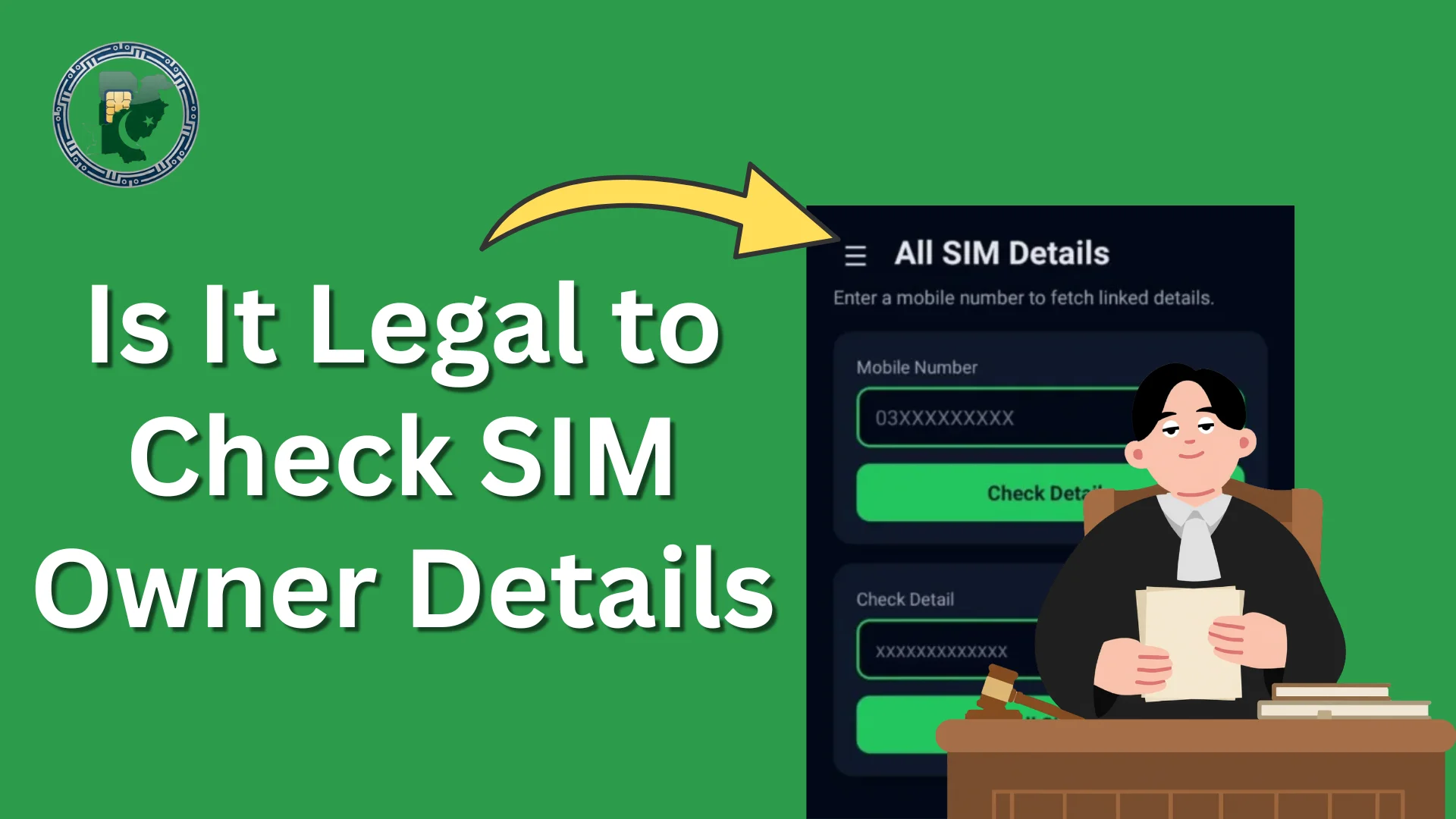
Is It Legal to Check SIM Owner Details in Pakistan?
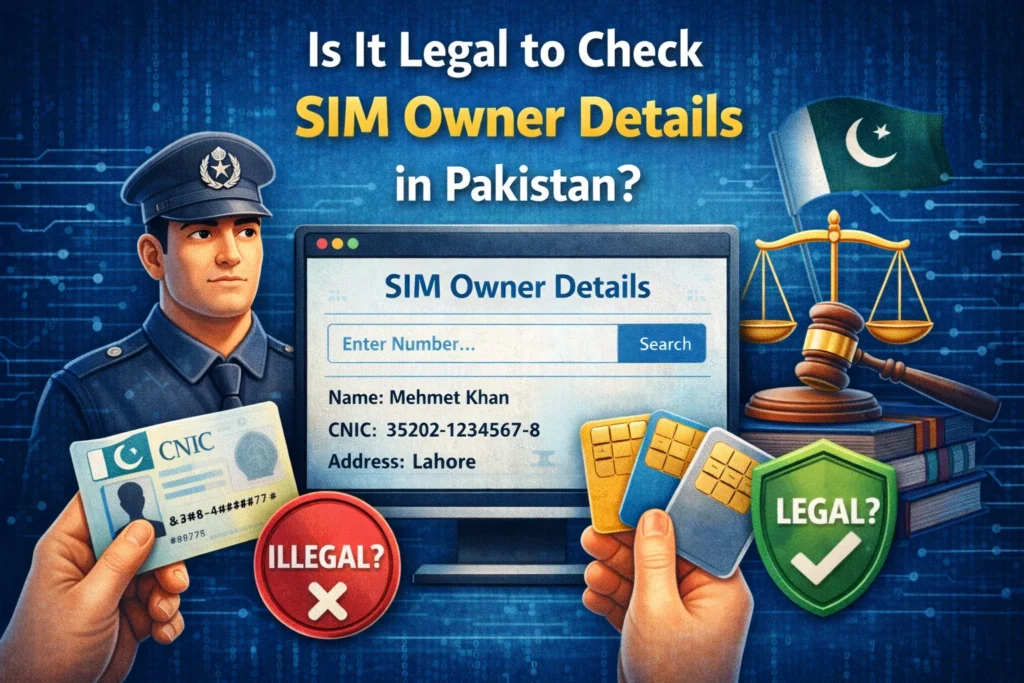
One thing is sure: no one is allowed to check someone else’s private data. Whether it is identity information or privacy data, such as images and videos.
That is why we strongly condemned the misuse of our SIM ownership details checker tool. Everyone should respect the privacy of others.
However, if you are in a situation where you need to check who is calling and bothering you, then this is your tool.
Besides this, let’s find out when it is legal or illegal to check SIM owner details according to Pakistani law.
Legal Reasons
Check Your Own SIM Data
Checking personal SIM data is allowed in Pakistan. A person has the right to know how many SIMs are registered on a CNIC. This helps prevent misuse. It also helps find unknown or extra SIMs. PTA allows this check through official methods.
The purpose is personal safety. No other person’s data is accessed. This action stays within the law and respects privacy rules.
Look for Someone Who Is Harassing You
Harassment is a serious issue. If unknown calls or messages cause trouble, reporting is allowed. A person can contact the PTA or the mobile operator. The goal is protection, not curiosity.
Authorities handle the process. Direct access to private data is not allowed. Legal channels help stop harassment. This use follows the law and supports personal security.
Investigate a Scam or Fraud
Scams cause financial and personal harm. Victims can report fraud to PTA or law enforcement. Authorities can trace the SIM data. The user does not access private data directly. The investigation stays official. This protects others from future scams. The law allows this action to maintain public safety and accountability.
Illegal Reasons
Misuse of Data
Using SIM data without permission is not allowed. Private information belongs to the owner. Accessing or sharing it breaks privacy laws. This includes names, addresses, or CNIC details. Such actions can cause harm. Pakistani law protects personal data. Misuse can lead to fines or legal action. Respecting privacy is mandatory.
Harass Someone
Using SIM details to threaten or disturb someone is a crime. Harassment violates privacy and safety laws. This includes repeated calls or messages. It also includes tracking a person without consent. The law does not allow this behavior. Offenders can face penalties. Personal data must never be used to harm others.
Selling Data to Someone
Selling SIM owner data is strictly forbidden. Personal information cannot be traded. This includes online or offline sales. Such actions risk identity theft. PTA and Pakistani law prohibit this practice. Data sellers can face serious punishment. Privacy protection is a legal duty.
Final Verdict
I hope this post has solved your problem and answered your query. Now you know when to check SIM ownership data and when not to. However, always stay within legal boundaries and respect the privacy of others.
You can check your CNIC to find out how many SIMs are registered in your name. This is your right, so you can do it without any issues. But you are not allowed to check someone’s SIM data if you are not authorized.
Thanks for coming and reading this guide!